Electric Field Therapy: Research Background
Explore the scientific background of electric field cancer therapy and external clinical studies. Learn about delivery challenges arising from anatomical conditions and the FieldCure technologies and products used to investigate them.
Electric field and thermal effects
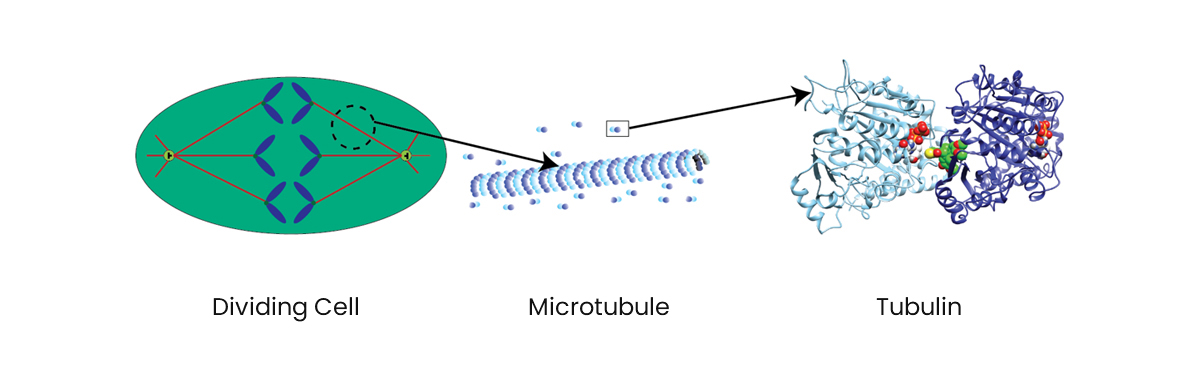
Alternating electric fields and cell division
Studies using alternating electric fields at specific frequencies and intensities have reported effects on tubulin assembly and cell division. The diagram below illustrates these sites of action.
Alternating electric field research — external trial description from NCI →
Radiofrequency energy and heat
Hyperthermia uses heat delivered to tissue. Radiofrequency is one way to deliver that heat; this approach should be distinguished from the cell-division-related effects of alternating electric fields.
Hyperthermia explained by the US National Cancer Institute →External clinical research: EF-14
This randomised trial enrolled 695 patients with newly diagnosed glioblastoma after radiochemotherapy. It compared the trial’s alternating electric field therapy plus maintenance temozolomide (TMZ; 466 patients) with TMZ alone (229 patients).
These data are from the EF-14 clinical trial using an external device, not clinical results for FieldCure products. Findings for this patient population and treatment regimen cannot be generalised to other cancers or to FieldCure products.
Time since randomisation. Electric field therapy refers to the treatment conditions used in the EF-14 trial.
View chart values as a table
| Time | Electric field therapy + TMZ | TMZ alone |
|---|---|---|
| 1 year | 73% | 65% |
| 2 years | 43% | 31% |
| 3 years | 26% | 16% |
| 4 years | 20% | 8% |
| 5 years | 13% | 5% |
Source: Stupp R, et al. JAMA. 2017;318(23):2306–2316. doi:10.1001/jama.2017.18718. PMID:29260225.
Read the original study →
FieldCure’s approach to precision electric field delivery
Electric field distribution within the body varies with target location, the structure and properties of surrounding tissues, and electrode placement. FieldCure investigates delivery conditions by comparing how these factors affect electric field and temperature distributions in target and surrounding tissues.
iMPACT is a technology framework that applies planning concepts from intensity-modulated radiation therapy (IMRT) to electric field distribution research. It brings multidirectional input and intensity modulation conditions into patient-specific 3D models, using electric field and thermal analysis to quantitatively compare results in regions of interest.
Research technology and product roles
- OncoField Lab
Simulation software for research and education, supporting modelling, electric field and thermal analysis, and comparison of results.
- iMET System
An electric field cancer therapy system under development, with preparations underway for entry into clinical trials.
- DeepField A460
A medical RF hyperthermia device that uses radiofrequency energy to deliver heat to the body. Its scope of use follows its product approval.
We also offer FieldGen equipment for preclinical research.
OncoField Lab is software for research and education. Refer to the product information for each medical device or development product’s intended use, regulatory status and development stage.